Palm Coast FL Relocation Guide 2026
If you are considering moving to Palm Coast, FL, this relocation guide can help you navigate one of the fastest-growing cities on the East Coast. The reasons for its rapid growth are straightforward: no state income tax, year-round sunshine, over 130 miles of interconnected trails, Atlantic beaches, and a housing market that still offers genuine value compared to South Florida or the Tampa Bay area. The city reached 109,886 residents as of July 2025, according to U.S. Census Bureau estimates, and has grown more than 23% since 2020, making it one of the more dynamic mid-sized cities in the Sunshine State.
If you are planning a relocation from the Northeast, downsizing from a pricier metro, or simply looking for a slower, more outdoor-oriented lifestyle, this guide covers everything you need to decide if Palm Coast is the right fit.
Where Exactly Is Palm Coast?
Palm Coast sits in Flagler County on Florida's northeast coast, roughly halfway between St. Augustine to the north and Daytona Beach to the south. Interstate 95 and US-1 both run through the area, giving residents fast access to Jacksonville (about an hour north) and Orlando (about 90 minutes south). International airports in both cities are within comfortable driving distance for most households.
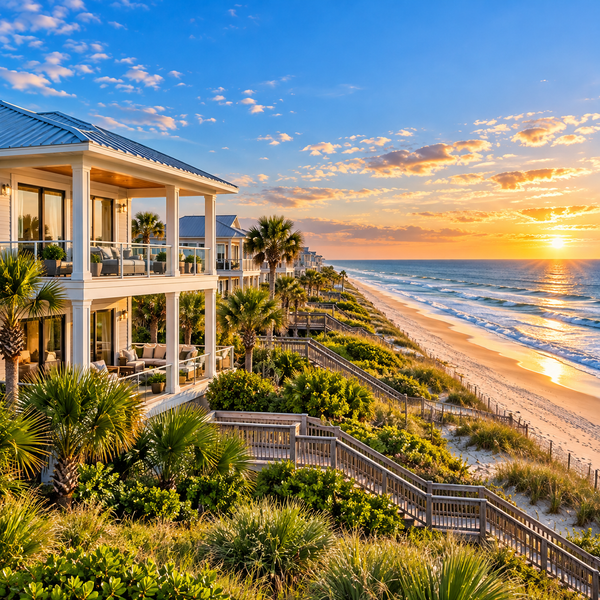
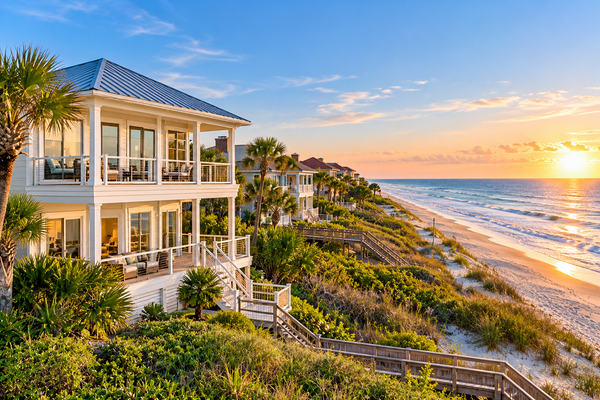
The city itself stretches inland from the Atlantic coast. Flagler Beach, a laid-back barrier-island community about 10 minutes east, is technically its own municipality but functions as Palm Coast's beachfront neighborhood for many residents.
The Housing Market: What Buyers and Renters Should Know
Home prices in Palm Coast span a wide range, which is part of the appeal. Based on aggregated MLS listing data for the three months ending August 2026, the median sale price for single-family homes sat around the mid-$300,000s, while active listing prices ranged from the upper $300,000s to the low $400,000s depending on location, age, and amenities.
Entry-level buyers will find newer construction in the city's established "lettered sections" (C-Section, F-Section, P-Section), where homes built after 2010 frequently come with open floor plans and energy-efficient systems. Mid-range and upper-tier buyers typically look at master-planned communities such as Grand Haven along the Intracoastal Waterway, or the barrier-island communities of Ocean Hammock and Hammock Dunes, where oceanfront condos and gated estate homes command a premium.
A few things to keep in mind when budgeting:
- No Florida state income tax. This is a genuine financial benefit that often offsets higher housing costs compared to income-tax states.
- Save Our Homes protection. Once you homestead your Florida property, assessed value increases are capped, which protects you from rapid property-tax escalation as the market grows.
- Flagler County property tax. Your effective rate depends on which city and special district your property falls within, but Flagler County property taxes compare favorably to most mid-Atlantic and Northeast states. The Flagler County Tax Collector's office can provide a current millage breakdown for any specific address.
- Home insurance. Coastal proximity affects premiums noticeably. Factor this into your monthly budget early, especially for properties east of the Intracoastal or in low-lying flood zones.
- HOA and CDD fees. Gated communities like Grand Haven carry both a homeowner association fee and a Community Development District fee. These fund the landscaping, amenity centers, golf courses, and security that make those communities desirable, but they add real monthly cost.
Neighborhoods Worth Knowing
Palm Coast is not a single community. It is a collection of distinct neighborhoods, each with its own personality and trade-offs. Here is a quick-reference overview before the deeper breakdown:
| Neighborhood | Type | Approx. price range | HOA / CDD | Best for |
|---|---|---|---|---|
| Ocean Hammock | Gated, barrier island | Upper $400Ks–$1M+ | Yes | Resort-style, beachside living |
| Hammock Dunes | Gated, barrier island | Mid $400Ks–$1M+ | Yes | Golf, oceanfront |
| Armand Beach East | Barrier island | Mid $300Ks–$600Ks | Varies | Beach access, quieter setting |
| Grand Haven | Gated, Intracoastal | Mid $300Ks–$700Ks | Yes | Golf, community amenities |
| Palm Coast Plantation | Gated, Intracoastal | Mid $300Ks–$800Ks | Yes | Waterfront, nature-preserve setting |
| Palm Harbor | Non-HOA, canal-front | Mid $300Ks–$600Ks | No | Boaters, flexible ownership |
| Flagler Beach | Beachside town | Mid $300Ks–$700Ks | Mostly none | Old-Florida, walkable lifestyle |
The Hammock communities (including Ocean Hammock, Hammock Dunes, and Armand Beach East) sit on the barrier island between the Atlantic Ocean and the Intracoastal Waterway. Gated, beautifully landscaped, and close to world-class golf, they suit buyers looking for resort-style living or a lock-and-leave second home. The trade-offs are real: seasonal foot traffic from resort guests, higher insurance premiums near the coast, and daily errands that often require crossing the bridge into Palm Coast proper.
Grand Haven is a master-planned, gated community along the Intracoastal Waterway on the mainland side. It offers a Jack Nicklaus-designed golf course, an amenity center with pool, tennis, pickleball, and fitness facilities, and a restaurant where neighbors gather. The Intracoastal trail running through the community is excellent for walking, running, and biking.
HOA and CDD fees apply, and the community has clear architectural standards, so it suits buyers who want structure and social connection more than total flexibility.
Palm Coast Plantation is a gated community set within a 4,000-acre preserve along the Intracoastal Waterway, centered around the 126-acre Emerald Lake. Residents have access to a clubhouse, resort-style pool, tennis and pickleball courts, a community boat ramp, and direct Intracoastal access via the adjacent Herschel King Park. It tends to attract buyers who want waterfront living and a strong amenity package without a golf-club fee structure.
Palm Harbor is a well-regarded non-HOA area popular with boaters. Most homes sit on deep canals that connect to the Intracoastal Waterway, meaning your boat can live in the backyard. It offers freedom but no communal amenities, and waterfront maintenance, including seawall upkeep, is entirely the homeowner's responsibility.
Flagler Beach delivers old-Florida charm in a compact, walkable beachside town. Surf shops, local cafes, and a fishing pier define the culture, and the lifestyle is genuinely laid-back.
Most homes sit outside large HOAs. Homes near the water command a premium and tend to be older, so buyers should plan for thorough due diligence on the structure and coastal insurance costs.
For buyers evaluating different communities before making a final decision, exploring local housing options across Flagler County offers additional perspective on lifestyle preferences and price points.
Schools in Flagler County
Flagler County's public schools are one of the first things that genuinely surprise newcomers. Flagler Schools was designated an A-rated school district by the Florida Department of Education for the 2025–2026 school year, with every school in the district earning either an A or B grade.
| School | Level | 2025–26 Grade |
|---|---|---|
| Flagler Palm Coast High School | High school | A |
| Matanzas High School | High school | A |
| Buddy Taylor Middle School | Middle school | A |
| Indian Trails Middle School | Middle school | A |
| Belle Terre Elementary | Elementary | A |
| Old Kings Elementary | Elementary | A |
| Bunnell Elementary | Elementary | B |
| Rymfire Elementary | Elementary | B |
| Wadsworth Elementary | Elementary | B |
That is a meaningful credential for families relocating from larger metro districts, where highly rated public schools are often tied to specific zip codes with much higher price points.
One important note: always verify attendance zones directly with Flagler Schools before writing an offer. Boundaries can shift as the district grows.
Healthcare
Palm Coast has two AdventHealth hospital campuses serving Flagler County. The original facility on State Road 100 employs roughly 1,100 staff members. The newer AdventHealth Palm Coast Parkway, which opened in August 2023, is a 100-bed, four-story hospital representing a $167 million investment in the community's healthcare infrastructure.
The Freytag Cancer Center, a 30,000-square-foot, two-story facility on the State Road 100 campus, is open and provides comprehensive cancer treatment services, including medical oncology and radiation oncology, alongside primary care physician offices.
AdventHealth Palm Coast has received a 5-star rating from the Centers for Medicare and Medicaid Services and was recognized in the 2026 Modern Healthcare 100 Top Hospitals program. That level of local healthcare infrastructure is relatively rare for a city of Palm Coast's size, and it is one of the practical quality-of-life factors that draws retirees and relocators.
One practical caveat worth knowing: primary care capacity has not kept pace with the city's population growth, and some incoming residents report difficulty finding a primary care physician accepting new patients. If this is a concern for your household, it is worth doing outreach before you move.
Jobs and the Local Economy
Palm Coast's economy centers on healthcare, education, hospitality, retail, and construction, all driven substantially by the city's own rapid growth. AdventHealth is one of the county's largest employers. The Town Center corridor along State Road 100 continues to attract new retail and services, and ongoing residential development generates consistent construction employment.
For many relocators, the more relevant picture is this: Palm Coast is an excellent base for retirees, remote workers, and those in healthcare or education. Professionals in specialized industries who need to commute will find Jacksonville, roughly an hour north via I-95, is the region's most accessible major job center.
Outdoor Life: A Major Draw
Palm Coast maintains over 130 miles of interconnected, paved multi-use trails that link neighborhoods, parks, and the waterfront, making it easy to walk, run, or bike from most residential areas without getting in a car. That trail network alone is a deciding factor for a lot of relocators.
Beyond the city trails, Princess Place Preserve is a 1,500-acre Flagler County park in the northern part of the county offering hiking, equestrian trails, paddling, fishing, and camping along the Matanzas River and Pellicer Creek. Washington Oaks Gardens State Park, located along A1A within Palm Coast's northern corridor, combines a formal rose garden, coastal hammock trails, and one of the most photogenic coquina rock shorelines in Florida.
Golfers have access to multiple courses, including Jack Nicklaus designs at Grand Haven and at the Hammock Beach Resort's Ocean Course. Boaters benefit from Intracoastal access throughout the canal-laced neighborhoods. Flagler Beach provides surf, pier fishing, and the kind of unhurried beach culture that many people move to Florida specifically to find.
Weather and Hurricane Preparedness
Florida's subtropical climate means warm, humid summers, mild winters, and a hurricane season that runs June through November, with the most active window typically falling August through October. Summer afternoons bring frequent, brief thunderstorms. Cooling costs run higher than most northern cities from roughly June through September.
The upside is consistent: winters are comfortable, spring and fall are genuinely pleasant, and the combination of year-round warmth with affordable outdoor recreation is the core lifestyle equation that keeps Flagler County among the faster-growing areas in the state.
When shopping for a home, review FEMA flood zone maps and discuss insurance options with a knowledgeable local agent early in the process, especially for properties on the barrier island or in low-lying areas near the Intracoastal.
Cost of Living: The Honest Picture
Palm Coast generally runs at or slightly below the national average cost of living for most households when housing is included, which makes it look attractive relative to South Florida or the mid-Atlantic states that supply many of its newcomers.
| Where costs run higher | Where Palm Coast competes well |
|---|---|
| Home insurance, especially for coastal or Intracoastal properties | No Florida state income tax (meaningful for retirees and remote workers) |
| Utilities, particularly summer cooling from June through September | Housing prices below comparable-quality Florida metro markets |
| Water and utility costs, which tend to run higher than in many mid-Atlantic or Midwest cities | Property taxes generally competitive by national standards |
| HOA and CDD fees in premium gated communities | Extensive free outdoor recreation across trails, parks, and beach access |
Putting It Together
Palm Coast punches above its size on several fronts: a top-rated school district, two hospital campuses with nationally recognized care ratings, an outdoor recreation network most larger cities would envy, and a housing market that remains accessible relative to most of coastal Florida. The trade-offs are real, particularly around insurance costs, primary care availability, and a specialized job market that may require a commute. For retirees, remote workers, families prioritizing schools, and anyone trading density for lifestyle, those trade-offs tend to be worth making.
Finding Your Ideal Location
Between shifting property tax rates, coastal insurance needs, and distinct HOA setups, choosing a location in Palm Coast takes a bit of research. Reviewing a breakdown of the best Palm Coast neighborhoods for relocating buyers is the easiest way to compare local communities, amenities, and price points before you start touring homes.
Frequently Asked Questions
-
Is Palm Coast a good place to retire?
Palm Coast is a strong fit for retirees. Florida's no-income-tax environment is a significant financial benefit on retirement income. The city offers mild winters, extensive outdoor recreation, two local AdventHealth hospital campuses with nationally recognized care ratings, and a range of housing options from entry-level single-family homes to gated golf communities. The main practical consideration is primary care availability; the physician-to-resident ratio has tightened as the population has grown rapidly.
-
What neighborhoods in Palm Coast are closest to the beach?
The barrier-island Hammock communities sit directly on the Atlantic. Ocean Hammock, Hammock Dunes, and Armand Beach East are among the closest residential options to the water. Flagler Beach, just to the south, offers beachfront and near-beach living in a less structured, non-gated environment.
-
Do I need flood insurance when buying in Palm Coast?
It depends on the specific property's elevation and FEMA flood zone designation. Oceanfront and Intracoastal-adjacent parcels are more likely to require it, while many inland homes in the lettered sections fall outside high-risk zones. A local real estate agent and your insurance provider can pull the specific flood zone data for any property you are considering before you make an offer.
-
How is the rental market in Palm Coast?
The rental market in Palm Coast spans a wide range, from single-family homes in non-HOA sections to gated-community residences and Flagler Beach cottages. Demand has grown steadily alongside population increases, and availability tends to be tighter than in larger metros. If you are arriving before buying, or evaluating Palm Coast as an investment market, researching current inventory early gives you a clearer picture of what is realistically available.
-
Is Palm Coast a good fit for remote workers?
Palm Coast suits remote workers well. The cost of living is lower than most coastal Florida markets, the trail network and outdoor access support an active daily routine, and fiber internet service has expanded considerably alongside the city's population growth. Co-working space options are limited compared to larger metros, but for fully remote workers who do not need a dedicated office outside the home, the overall package is competitive.
-
Is Palm Coast still affordable compared to the rest of Florida?
In general, yes. Housing costs remain more accessible than in the greater Orlando, Jacksonville Beaches, or South Florida markets, and the no-state-income-tax advantage compounds that value for income-earning relocators and retirees alike. That said, insurance costs, utility bills, and HOA fees in premium communities are real variables that need to go into any honest budget comparison. Running a full monthly estimate that factors in insurance, utilities, and any HOA or CDD fees alongside your mortgage payment will give you a much clearer picture than looking at the purchase price alone.
Categories
Recent Posts