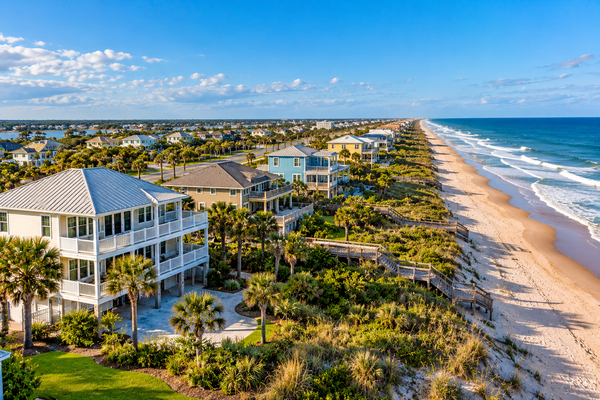
Break-Even Analysis: How Long Until Buying Beats Renting in Palm Coast
A Palm Coast break-even analysis is most useful when it shows whether buying fits your expected timeline, rather than treating ownership as an automatic win. Renting may require less cash at the start, while buying can build equity and, with a fixed-rate mortgage, provides a fixed principal-and-interest payment. For relocation buyers, the crossover depends on the home you choose, comparable rent, financing terms, insurance, maintenance, and how long you expect to stay. The goal is to compare two realistic housing paths using the same assumptions.
Palm Coast Buy vs. Rent Context
Palm Coast's published local profile provides useful household and housing context, but a personal break-even model still needs property-specific prices, rent, financing, and insurance inputs (Palm Coast, FL).
| Metric | Reading | Source / geography |
|---|---|---|
| Median home value | $238,620 | Published Palm Coast postal-city profile |
| Median household income | $54,170 | Published Palm Coast postal-city profile |
| Owner-occupied households | 78.75% | Published Palm Coast postal-city profile |
| Housing cost index | 104, U.S. average = 100 | Published Palm Coast postal-city profile |
What Is a Break-Even Analysis?
A break-even analysis identifies the point when the estimated financial position from owning becomes more favorable than continuing to rent a comparable home. It is not simply a mortgage-versus-rent comparison for one month. It follows the full cost and value of each option over a realistic holding period.
Buying carries one bucket of costs: the opportunity cost of the down payment, closing costs, mortgage interest, property taxes, homeowners insurance, maintenance, and any mortgage insurance that applies. It also creates potential value through principal repayment and changes in the home's market value.
Renting carries another bucket: monthly rent, future rent increases, renter's insurance, and the potential investment return on cash not used for a purchase. A complete comparison also considers estimated sale proceeds, selling costs, the remaining loan balance, and the cost of invested cash. Tax treatment varies by household, loan, and filing situation, so it should not be assumed as a fixed benefit.
Monthly Cost Breakdown: Buying vs. Renting in Palm Coast
A reliable Palm Coast comparison starts by matching like with like, such as a similar home size, location, lease term, and included services. Buying costs should include principal and interest, property taxes, homeowners insurance, association dues or maintenance reserves, and mortgage insurance when applicable. Renting costs should include the lease payment and renter's insurance.
Because these expenses vary materially by property, loan program, insurance quote, and lease, use a specific listing and comparable rental before totaling either side. The published Palm Coast neighborhood profile can provide local context, while the final calculation should reflect the home and rental alternative you are actually considering.
Understanding local rental conditions is an important part of deciding whether buying makes financial sense. Rental prices, property types, and neighborhood demand can influence how much you might spend if you continue renting. For a closer look at these factors, explore our 2026 insights into Palm Coast rental prices and market trends before comparing your expected rental expenses with the full cost of homeownership.
Upfront Costs That Set the Starting Line
Upfront costs are the reason buying rarely wins on day one. Before the first payment, a buyer may commit a down payment, lender and title charges, recording-related fees, prepaid insurance, and initial tax escrow funding. Those items are not identical for every Palm Coast purchase because loan terms, closing dates, property taxes, and insurance requirements differ.
The down payment has two effects. Putting more down reduces the amount borrowed and can remove mortgage insurance, which may improve the monthly ownership picture. At the same time, that cash is no longer available for moving expenses, reserves, or other investments. The relevant question is not whether a larger down payment is always better, but whether it supports your cash position and holding plan.
To see the early-year impact, divide one-time purchase costs across the months you realistically expect to own the home. A cost that feels substantial over a one-year horizon may have a much smaller monthly effect over several years. The Consumer Financial Protection Bureau's Loan Estimate guidance is a useful document for identifying loan charges, prepaids, and cash-to-close items before comparing them with rent.
The Break-Even Formula
Break-Even Month ≈ (Total Upfront Costs) ÷ (Monthly Renting Cost − Monthly Owning Cost after equity & tax benefit)
When the monthly ownership cost is already lower than rent, break-even is driven entirely by how fast the upfront costs are recovered. When ownership costs more per month, break-even only arrives once equity gains and rent appreciation tip the balance — so run both scenarios.
Palm Coast Break-Even Analysis - Estimating Your Timeline
Palm Coast buyers should treat break-even as a property-specific, multi-year calculation rather than a single market-wide month count. The result changes when the purchase price, comparable rent, interest rate, insurance quote, property tax bill, maintenance reserve, and expected resale costs change.
For a 20% down scenario, the loan amount is lower and mortgage insurance may not apply. That can reduce the monthly ownership cost, but the larger down payment and closing costs still need time to be recovered. For a 5%–10% down scenario, more cash remains available after closing, yet the larger loan balance and possible mortgage insurance can widen the monthly ownership gap.
Use an illustrative worksheet, not a market quote: enter the home price, down payment, loan rate, insurance quote, taxes, association dues, maintenance reserve, comparable rent, planned length of stay, and estimated selling costs. Then compare the projected financial position at the end of each year. Include principal paydown, a conservative value-change assumption, rent changes, and the opportunity cost of cash.
This approach is particularly useful for relocation buyers because it separates a short-term landing plan from a long-term housing decision. If you expect to move again soon, flexibility may have greater value. If you expect to remain in the same home for several years, upfront costs have more time to be absorbed.
Break-Even Timeline: Palm Coast vs. Nearby Markets
Palm Coast can be more or less favorable than another market depending on the relationship between comparable rent and the full cost of ownership. A lower purchase price does not automatically create a shorter break-even period if insurance, taxes, association dues, or maintenance needs are higher.
For a meaningful comparison, use the same loan assumptions and the same type of home across each market. Compare a similar number of bedrooms, condition, lease term, and location rather than pairing an apartment rental in one area with a detached home in another. That method shows whether the price-to-rent relationship, not a headline price, is driving the decision.
Palm Coast Break-Even Analysis Factors That Change the Date
The break-even date moves when the monthly ownership total or upfront cash requirement changes. Five factors matter most for Palm Coast buyers.
First, mortgage rates directly affect principal and interest. A half-point rate shift changes the payment on the same loan balance, so run the calculation with the actual rate available to you rather than relying on a general estimate.
Second, down payment size affects both the loan balance and the cash committed at closing. A lower down payment may preserve reserves, while a larger one can reduce the monthly payment and potential mortgage insurance.
Third, rent growth and home-value movement shape the longer-term comparison. Rising rent can make ownership more competitive over time, while home-price changes should be modeled conservatively rather than treated as guaranteed.
Fourth, property taxes, homeowners insurance, maintenance, and association dues can materially change the result. Eligible owner-occupants may also want to review Florida homestead provisions with the appropriate local office or tax professional.
Finally, length of stay is decisive. The longer you expect to remain in the same home, the more time there is for upfront costs and transaction costs to be spread across the ownership period.
Pro-Tip: Plan to stay beyond the point when your property-specific model absorbs upfront and eventual selling costs, not merely until the monthly mortgage payment resembles rent.
When Renting Can Be the Better Financial Choice
Renting can be the smarter financial choice in Palm Coast when your timeline is short or uncertain. If a job change, family decision, or relocation plan could move you before purchase and resale costs have time to be absorbed, flexibility may be worth more than potential equity.
Renting can also make sense when a comparable lease costs materially less than the full ownership total. Compare rent with principal and interest, taxes, insurance, association charges, maintenance reserves, and any mortgage insurance, not with the mortgage payment alone.
A changing rate environment is another reason to model more than one scenario. Buyers who would use most of their available cash at closing may prefer to retain liquidity until their location, income, and home requirements are more settled. Buying works best when the total payment and reserves remain comfortable after closing.
Your Personal Palm Coast Break-Even Calculation
Your break-even date depends on your down payment, financing, comparable rent, insurance quote, and expected length of stay. A personalized calculation can turn those moving parts into a clearer Palm Coast decision.
Deciding whether to buy or rent in Palm Coast starts with understanding your budget, monthly housing costs, and long-term plans. Alina Pekarsky helps buyers and renters explore their options by comparing home prices, rental expenses, financing, insurance, and potential ownership costs. Whether you're relocating or planning your next move, contact Virtual Homes Realty for a friendly, no-pressure conversation about which option makes the most sense for your lifestyle and financial goals.
Frequently Asked Questions
How long does it take for buying to be cheaper than renting in Palm Coast?
There is no single Palm Coast timeline that fits every buyer because the result depends on the specific home, rent alternative, financing, insurance, and planned stay. A buyer should compare projected costs and estimated sale proceeds year by year before deciding whether ownership fits the timeline.
What upfront costs do buyers in Palm Coast need to factor into a break-even calculation?
Include the down payment, lender and title charges, recording-related fees, prepaid insurance, initial tax escrow, and the opportunity cost of cash used at closing. The CFPB Loan Estimate helps organize these costs before you compare them with a rental alternative.
How does the current mortgage rate affect the break-even timeline?
A higher rate raises the principal-and-interest payment for the same loan balance, which can extend the time needed for ownership to become competitive. Test the rate offered for your loan alongside the same price, down payment, insurance, taxes, and comparable rent.
Is it better to buy or rent in Palm Coast right now?
Renting may fit a short or uncertain stay, while buying may fit a household that can comfortably carry the complete ownership cost for several years. The stronger choice is the one that matches your cash reserves, mobility needs, and property-specific numbers.
How does renting vs. buying in Palm Coast compare to nearby areas?
The comparison depends on each market's price-to-rent relationship and its recurring ownership costs. Use similar homes and identical loan assumptions across locations so the result reflects the market rather than mismatched properties.
Categories
Recent Posts