Palm Coast Relocation Guide: Everything Before the Move
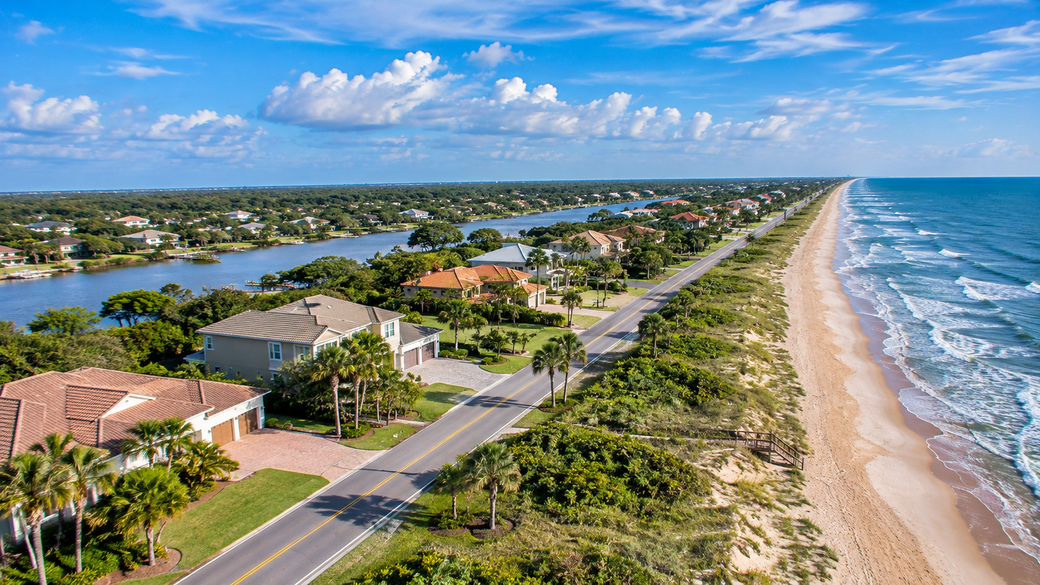
Palm Coast relocation offers a coastal Florida lifestyle with a 2025 median single-family home price of $369,000, according to the City of Palm Coast housing dashboard. Moving here still requires practical planning around housing type, school assignments, commuting, weather exposure, and ongoing ownership costs. This guide helps out-of-state relocation buyers compare daily life, budget realistically, and narrow their search to a neighborhood that fits their priorities.
Palm Coast Relocation Quick Reference
Palm Coast combines a sizable residential population, access to I-95, and an outdoor-oriented routine shaped by the Intracoastal Waterway and nearby beaches. These figures provide a useful starting point, although property-level costs vary with location, construction, association rules, and insurance needs.
- Median single-family home price: $369,000 in 2025, based on the City of Palm Coast housing dashboard. This is a sale-price measure and should not be confused with an assessed value or a broad estimate of home worth.
- Median household income: $77,350 for Palm Coast city during 2020 to 2024, measured in 2024 dollars, according to the U.S. Census Bureau.
- Cost of living: About 6% below the national average overall, with housing roughly 17% below average and utilities about 20% above, based on Council for Community and Economic Research data published in March 2026.
- Population: 110,330 residents in the City of Palm Coast's 2025 estimate, about 78% of Flagler County's population. The Census Bureau's July 2025 estimate is 109,886, up 23.2% since 2020.
- Average commute: 27.0 minutes for workers age 16 and older during 2020 to 2024, according to the U.S. Census Bureau's American Community Survey.
- Big relocation draw: Lifestyle flexibility. Palm Coast pairs suburban-scale neighborhoods with beaches, golf, boating, trails, and I-95 access, giving buyers a choice between inland convenience and more amenity-focused settings.
Why People Are Moving to Palm Coast
People are moving to Palm Coast for a lower-density Florida setting that combines residential space, regional road access, and an outdoor lifestyle. The city's population grew about 23% between 2020 and 2025, and the City of Palm Coast estimated 110,330 residents in 2025, reflecting its role as Flagler County's largest population center. A median single-family home price of $369,000 also gives relocation buyers a clear starting point for their budget.
Daily access is another pull factor. I-95 links Palm Coast to regional employment centers and travel destinations, while local errands, healthcare, schools, parks, and recreation are spread across a primarily residential city. Census data places the mean commute at 27.0 minutes, though a specific route can vary greatly by workplace and neighborhood.
The local employment picture is supported by healthcare, education, retail, hospitality, construction, public services, and small businesses. That mix can suit households with local employment, hybrid schedules, or flexible regional commutes. Palm Coast's housing stock also includes established single-family areas, attached homes, golf-oriented communities, and coastal-adjacent options.
For buyers comparing neighborhood character, this overview of how Palm Coast's communities differ is a helpful way to match location, property style, and everyday routines.
Housing Market Overview
Palm Coast offers several housing paths, from established inland single-family homes to attached residences, golf-community properties, and coastal-adjacent homes. The city's 2025 median single-family home price was $369,000, but that figure does not establish a single price range for every property type or neighborhood. About 82% of occupied homes in Palm Coast are owner occupied, and the Census Bureau puts the median owner-occupied home value at $350,800 for 2020 to 2024.
Single-family homes are often the broadest category for relocation buyers, with value shaped by lot size, roof age, renovations, drainage, outdoor living areas, and distance from the coast. Condos and townhomes can offer a different maintenance arrangement, but buyers should closely review association budgets, rules, reserves, and recurring fees. Newer construction and recently developed sections of planned communities can provide more contemporary layouts, while established homes may offer mature landscaping and more varied lot configurations.
The buyer experience can differ by condition and price point. Move-in-ready homes with updated major systems may attract stronger attention, while homes needing maintenance can require more budget flexibility. Rather than treating Palm Coast as one uniform market, compare each property's full monthly ownership picture, including taxes, insurance, utilities, and community fees.
Renting First vs. Buying Right Away
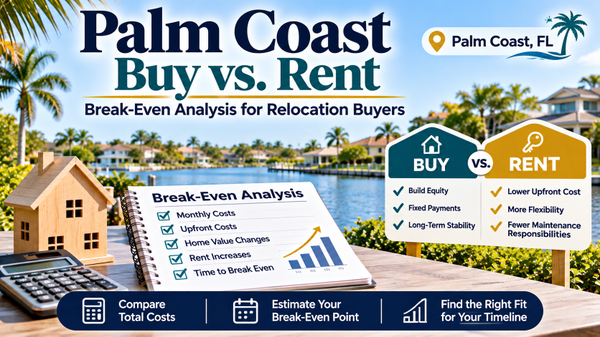
Many out-of-state households rent for a lease term before buying so they can learn the area, test commutes, and sell a home elsewhere without carrying two payments. Palm Coast's median gross rent was $1,782 for 2020 to 2024, according to the Census Bureau, and browsing current long-term rentals shows what is available at your size and budget. If you plan to buy right away, a payment estimator can help you test price, rate, and down payment scenarios before you tour.
Neighborhoods and Communities in Palm Coast
Palm Coast neighborhoods differ most in housing style, amenities, and proximity to daily destinations, so relocation buyers should begin with lifestyle priorities instead of a single citywide price expectation.
Indian Trails is an established residential section of Palm Coast with primarily single-family homes, access to local schools, parks, and everyday services. It can suit households looking for an inland neighborhood setting and a range of home conditions and layouts.
Pine Grove - Belle Terre is another largely residential choice for buyers who want detached homes, local road access, and a quieter daily routine. It can appeal to remote workers, families, and buyers who prioritize space over a resort-style community format.
Palm Harbor is often considered by buyers drawn to established homes near canals, trails, and waterfront-oriented recreation. Property-specific features such as dock access, outdoor space, roof condition, and insurance requirements can vary considerably.
Grand Haven is an amenity-oriented gated community along the Intracoastal Waterway that may appeal to move-up buyers and downsizers who value organized neighborhood features. Association fees, rules, and included services should be part of the first-round budget comparison, and a closer look at what Grand Haven offers can help you weigh those costs.
Palm Coast Plantation is a gated community on the Intracoastal Waterway known for waterfront and water-view homes and a quieter, upscale feel. It suits move-up and luxury buyers who want water access within Palm Coast, with association obligations, flood-zone status, and insurance considerations playing a larger role in total ownership costs.
Palm Coast Jobs and Economy
Palm Coast's economy is centered on services that support a growing residential community, including healthcare, education, retail, hospitality, construction, government, and professional services. Relocators working in those fields may find local and countywide opportunities, while I-95 also supports commuting patterns along the coast.
The U.S. Census Bureau reported a median household income of $77,350 for Palm Coast city during 2020 to 2024, measured in 2024 dollars. Buyers should still base affordability decisions on their own expected earnings and housing costs rather than treating a citywide figure as a personal benchmark.
Reliable internet access and a suitable home workspace are practical considerations for hybrid and remote workers. About 89% of Palm Coast households have a broadband subscription, but service options vary by street. Before committing to a property, confirm service availability, upload speeds, and cell coverage at the exact address.
Palm Coast Schools and Education
Palm Coast is served by Flagler Schools, which operates elementary, middle, and high school options across the area. Families should confirm current attendance boundaries, transportation, programs, and enrollment details directly with the district before making an offer on a home.
The Florida Department of Education rated Flagler Schools an A district for 2026, its first districtwide A since 2019, and every district school earned an A or a B. Palm Coast campuses with 2026 A grades include Belle Terre Elementary School, Old Kings Elementary School, Buddy Taylor Middle School, Indian Trails Middle School, Flagler-Palm Coast High School, and Matanzas High School. Rymfire Elementary School, which serves grades PK through 5, earned a B. These are Florida school grades, not third-party rating scores.
Private and faith-based schools are also available locally. Flagler Technical College and dual-enrollment opportunities can be relevant for older students and career-focused households.
School fit remains address-specific. Families should compare the assigned campus, grade configuration, transportation arrangements, academic offerings, and extracurricular options for the particular neighborhood they are considering.
Climate and Lifestyle
Palm Coast supports outdoor living through much of the year, with mild winters, warm summers, and regular rainfall. Local climate conditions generally mean buyers can plan for beach time, boating, golf, walking, and trail use in every season, while also preparing for heat, humidity, and afternoon storms during warmer months.
Daily recreation often centers on the Intracoastal Waterway, Palm Coast's trail network, waterfront parks, golf facilities, and nearby Atlantic beaches. The city's mix of residential streets and outdoor amenities can be especially appealing to relocators who want a quieter routine without giving up regular access to recreation.
Hurricane preparedness is an essential part of coastal Florida ownership. Buyers should evaluate a property's roof age, wind-mitigation features, flood-zone status, drainage, shutters or protective systems, and available insurance coverage. Premiums and deductibles can vary sharply by address and construction details. Florida sellers must also provide a written flood disclosure at or before contract signing, which is worth reviewing alongside the flood map.
The practical lifestyle tradeoff is straightforward: Palm Coast offers extensive outdoor access, but homeowners should budget for storm preparation, seasonal maintenance, and potentially higher cooling use during the hottest parts of the year.
What to Budget Beyond the Purchase Price
- Property taxes: Budget from the expected taxable value, applicable exemptions, and local millage rate. A prior owner's bill may not reflect the taxes after a sale, especially if the seller had a homestead exemption.
- Homeowners insurance: Premiums can differ based on roof age, construction, wind features, coastal proximity, and claim history. Obtain an address-specific quote before finalizing a purchase budget.
- Hurricane preparation: Plan for emergency supplies, possible wind or hurricane deductibles, and maintenance of protective features. Flood-zone status and wind coverage should be reviewed separately.
- HOA or condominium fees: Fees may apply in planned communities and attached-home developments. Review what the fee covers, reserve funding, rental rules, and the possibility of special assessments.
- Utilities: Palm Coast utility costs run roughly 20% above the national average, and cooling use can be a meaningful variable during hot and humid periods.
What This Means for Move-Up Buyers, Investors, and Relocating Homeowners
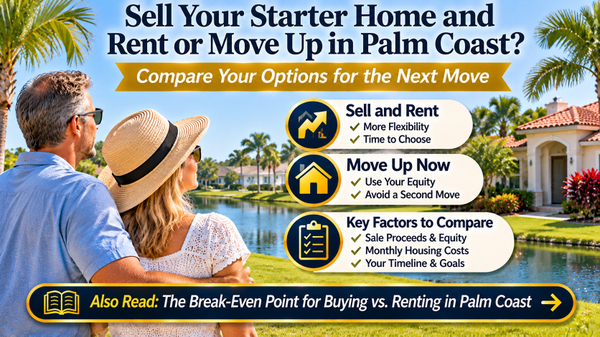
Relocating homeowners and move-up buyers should line up the sale of their current home with the Palm Coast purchase early. Selling first, then renting briefly, can remove the pressure of two payments, while buying first works best when equity and reserves comfortably cover both for a few months.
Rental and first-time investors will find steady demand from households that rent while they learn the area. Underwrite each property on its own rent comparables, insurance quote, association leasing rules, and a plan for management if you live out of state.
Luxury buyers looking at gated or waterfront communities should give association documents, flood history, and insurance quotes the same weight as finishes, since those costs can shape the monthly total as much as the price.
Palm Coast Relocation Decision Framework
Palm Coast is generally best for buyers seeking a suburban Florida lifestyle with outdoor access. Use this framework to check fit before narrowing your search.
| Factor | What Palm Coast offers | What to verify for a specific home |
|---|---|---|
| Home-price reference | $369,000 median single-family price, 2025 | Recent comparable sales for the exact neighborhood and home type |
| Cost of living | About 6% below the national average overall | Insurance, utilities, and association fees for the address |
| Schools | Flagler Schools, rated an A district for 2026 | Assigned campus and transportation for the address |
| Regional commute | I-95 access, 27.0-minute mean commute | Drive time to your workplace at peak hours |
| Climate considerations | Heat, storms, wind, and flood-zone variation | Flood zone, roof age, wind mitigation, and the seller's flood disclosure |
| Lifestyle fit | Suburban, outdoor-oriented, coastal access | Proximity to trails, water, golf, and daily services you use most |
The Palm Coast figures in this framework draw from the City of Palm Coast's 2025 housing dashboard, the U.S. Census Bureau, and the Florida Department of Education's 2026 grades. The right choice depends on the commute, preferred housing style, comfort with coastal exposure, and the daily environment a household wants after the move.
Ready to Make Your Move to Palm Coast?
A successful Palm Coast relocation starts with clear priorities: daily routine, work location, housing style, monthly ownership costs, and comfort with coastal weather planning. Alina Pekarsky and the Virtual Homes Realty team work with out-of-state buyers in person, online, and by phone, so you can compare neighborhoods and real costs even before you arrive.
Call or text (386) 445-9911 or email alina@vhrfl.com to talk through your move.
Frequently Asked Questions About Moving to Palm Coast
Is Palm Coast a good place to live?
Palm Coast can be a good fit for people who want a residential Florida setting with outdoor recreation, regional road access, and a wide range of home styles. The City of Palm Coast estimated 110,330 residents in 2025, giving the city a substantial local-service base without the density of a major urban core. The strongest fit depends on your work pattern, preferred neighborhood character, and storm-preparedness expectations.
How affordable is housing in Palm Coast?
Palm Coast's median single-family home price was $369,000 in 2025, according to the City of Palm Coast housing dashboard, and overall living costs run about 6% below the national average. Buyers should compare taxes, insurance, utilities, and association fees alongside the asking price, since those costs vary widely by address.
What are the job prospects in Palm Coast?
Employment options in Palm Coast and the surrounding area are concentrated in healthcare, education, retail, hospitality, construction, government, and professional services. Hybrid workers and regional commuters should evaluate travel patterns along I-95 and internet service at the address level.
What should I know about schools in Palm Coast before moving?
Flagler Schools serves Palm Coast and earned an A district grade for 2026 from the Florida Department of Education, with every school rated A or B. Belle Terre Elementary, Old Kings Elementary, Buddy Taylor Middle, Indian Trails Middle, Flagler-Palm Coast High, and Matanzas High all earned A grades. Families should verify enrollment and attendance boundaries directly with the district.
What are the biggest costs to budget for when relocating to Palm Coast?
The most important costs beyond the purchase price are property taxes, homeowners insurance, utilities, association fees, and storm preparation. Utilities run roughly 20% above the national average, while insurance can change significantly based on roof condition, wind features, and flood-zone status. A property-specific monthly estimate is more useful than a broad citywide budget.
Categories
Recent Posts